Independent guide for United States residents

Free Government Phone Programs Guide for 2025

Many households in the United States rely on a phone to apply for jobs, reach doctors, stay in touch with family, or call for help. If your income is limited, the Lifeline program and related offers can lower your monthly phone bill or help you apply for your free government smartphone here. This guide explains how the programs work, who may qualify, how to apply safely, and what to watch out for.

Updated on
Independent, not a government website
Illustration of free smartphones available through government assistance programs in the United States

Lifeline support

Monthly discount on phone or internet for eligible households

At a glance
3 main types of free or discounted phone options covered in this guide

Eligibility Probability Calculator

Quick estimate only

Answer these two questions to see how closely you match common Lifeline profiles. This is not an official decision, only an educational estimate.

Income ranges are approximate. Always compare your actual income to the current charts used in your state.
Your quick result will appear here after you answer the questions above.
✅ High Probability! Claim Your Free Smartphone Now

What this guide covers for United States residents

This page is written for people living in the United States who want to understand how free government cell phone programs work and what steps they can take if they believe they qualify. The focus is on the federal Lifeline program and on similar low cost options that can make it easier to keep a working phone in your pocket.

In plain language, you will find explanations of:

  • How free government cell phone programs are funded and why they exist for low income households.
  • Who may qualify based on income, household size, or participation in programs like SNAP, Medicaid, SSI, or Federal Public Housing Assistance.
  • What documents you usually need to prepare before you start an application, and how the National Verifier is used to confirm eligibility.
  • How to compare providers, plans, and devices, including choices between basic flip phones and full smartphones.
  • How to avoid common scams, protect your identity, and only apply through trusted websites or local partners.
  • What to do after you are approved, including activation, recertification, and changing providers if your needs change.

Every section of this guide was written and reviewed with a focus on clarity, accuracy, and fairness. Program rules can change, so you should always double check details on official program sites before you apply.

Key programs you will see in this guide

When people talk about a free government phone, they are usually referring to one of the following:

  • The federal Lifeline program, which can lower your monthly cost for phone service, internet service, or a bundle of both.
  • A phone service plan offered by a company that participates in Lifeline, sometimes with a discounted or no cost device for new enrollees.
  • A state or local program that layers additional discounts on top of federal support, especially in Tribal areas or for residents in rural communities.

In the past, many households also received help through the Affordable Connectivity Program (ACP). That program helped lower the cost of home and mobile broadband. Funding for ACP has ended for most users, so this guide refers to ACP only when it helps explain earlier benefits or possible future program changes.

The heart of current federal support is Lifeline. Understanding how Lifeline works is the starting point for choosing a provider and a phone that matches your day to day life.
Eligibility for free government phone programs

Lifeline rules are set at the federal level, but the way you qualify can vary slightly by state and by provider. In general, you may qualify by income or by participating in certain assistance programs.

These examples are for education only and do not replace official program rules

Two main paths to qualify

The Lifeline program allows households to qualify in one of two primary ways:

  1. Income based eligibility. Your household income is at or below a percentage of the Federal Poverty Guidelines. The specific percentage can change, but many households qualify when income is at or below 135 percent of the Federal Poverty Guidelines.
  2. Program based eligibility. Someone in your household already participates in certain assistance programs, such as:
    • Supplemental Nutrition Assistance Program (SNAP, sometimes called food stamps).
    • Medicaid.
    • Supplemental Security Income (SSI).
    • Federal Public Housing Assistance (Section 8).
    • Veterans Pension or Survivors Pension.
    • Some Tribal specific assistance programs if you live on qualifying Tribal lands.

A household is considered a group of people who live at the same address and share income and expenses. In some cases, people living at the same address can be treated as separate households if they do not share income or expenses, but this requires careful documentation.

Illustrative income guidelines

The figures below are simplified examples to help you think about whether your income may be within range. They are not official numbers, and you must always rely on current guidelines published by program administrators.

Household size Example max annual income Notes
1 person $21,870 Single adult living alone.
2 people $29,580 For example, two adults, or one adult and one child.
3 people $37,290 Each additional person increases the income limit.
4 people $45,000 Family of four living at the same address.
Each additional person + $7,710 Illustrative amount added per extra household member.

Figures above are rounded examples only. Official guidelines can change annually and may vary for Alaska, Hawaii, and Tribal lands. Always use the current charts provided during the application process.

Documentation you may be asked to provide

The National Verifier checks your eligibility using secure data sources when possible. If those checks are not enough, you may be asked to upload or mail documents such as:

  • Pay stubs or a recent tax return to show income.
  • Benefit approval letters for programs like SNAP, Medicaid, or SSI.
  • An official letter from a Tribal assistance program if you qualify based on Tribal benefits.
  • Proof of address, such as a utility bill or lease agreement.
  • Photo identification that matches your application name.

Never send your original documents to a provider. Only send copies or secure uploads through official systems. If you receive a text that asks you to text photos of your ID to an unknown phone number, treat it with caution and confirm that the request is legitimate before you respond.

Special situations for seniors, veterans, and people with disabilities

The basic eligibility rules apply to everyone, but certain groups often qualify through specific programs:

  • Senior citizens. Many older adults qualify through Medicaid, Supplemental Security Income, or participation in state based programs that work with the federal Lifeline benefit.
  • Veterans and surviving spouses. If someone in the household receives Veterans Pension or Survivors Pension, that can satisfy program based eligibility.
  • People with disabilities. Disability income that results in a low household income, or enrolment in SSI or certain disability related programs, can help meet eligibility requirements.
  • Students and job seekers. Individuals enrolled in job training or education programs may still qualify if household income is below the threshold or if they receive SNAP, public housing assistance, or similar benefits.

Lifeline focuses on the household as a whole. A student living away from home in a dorm or apartment may be treated as a separate household if they pay their own expenses, but the student or their family should review the rules carefully to avoid duplicate benefits.

One Lifeline benefit per household rule

Federal rules allow only one Lifeline benefit per household. This means your household can have either one discounted phone line or one discounted internet line through Lifeline, not one of each for every person. Signing up for more than one Lifeline benefit at the same address can lead to cancellation of service and possible repayment of benefits.

If you live with roommates or extended family and each person wants service, talk with providers about low cost plans that do not rely on the Lifeline discount. That way you can stay within the rules while still keeping everyone connected.

How to apply for a free government supported phone

Every provider has its own sign up process, but the major steps are similar. You confirm eligibility, choose a provider that operates in your state, complete an application through the National Verifier or provider portal, then activate your device and keep your benefit active through regular use and recertification.

Typical time from starting an online application to decision is often measured in days, not minutes

Step by step application flow

  1. Confirm that you likely qualify. Review income guidelines and program based eligibility. If you already receive SNAP, Medicaid, SSI, or similar benefits, keep your approval letters nearby.
  2. Identify providers in your area. Not every company serves every state, and some providers focus on certain counties or Tribal communities. Visit official Lifeline resources or call local social service agencies to see which providers operate where you live.
  3. Create an account with the National Verifier, if required. Some residents apply through a central portal before choosing a provider. In other areas, the provider helps you submit information to the National Verifier as part of the application.
  4. Gather documents. Take clear photos or scans of income proof, benefit letters, and identification. Make sure your name and address are readable and match your application.
  5. Complete the application online, by mail, or in person. Many providers let you apply on a smartphone or computer. Some communities also offer local partner offices that can submit applications on your behalf if you prefer in person help.
  6. Wait for review and respond quickly to requests. If the verifier or provider needs more information, you may receive an email, letter, or text. Respond promptly using the official contact channels listed on the provider site.
  7. Activate your service. Once approved, you receive a SIM card or device. Follow the instructions to activate, test calling and texting, and set up voicemail.
  8. Use your service regularly. Many providers require a certain level of monthly use to keep your account active, such as placing or receiving a call, sending a text, or using data.

If you are unsure about a step, it is better to pause and ask questions through a verified phone number or local non profit than to rush through a link you do not fully trust. Your personal information is valuable, and legitimate providers will not pressure you to act within minutes.

Visual overview of the process

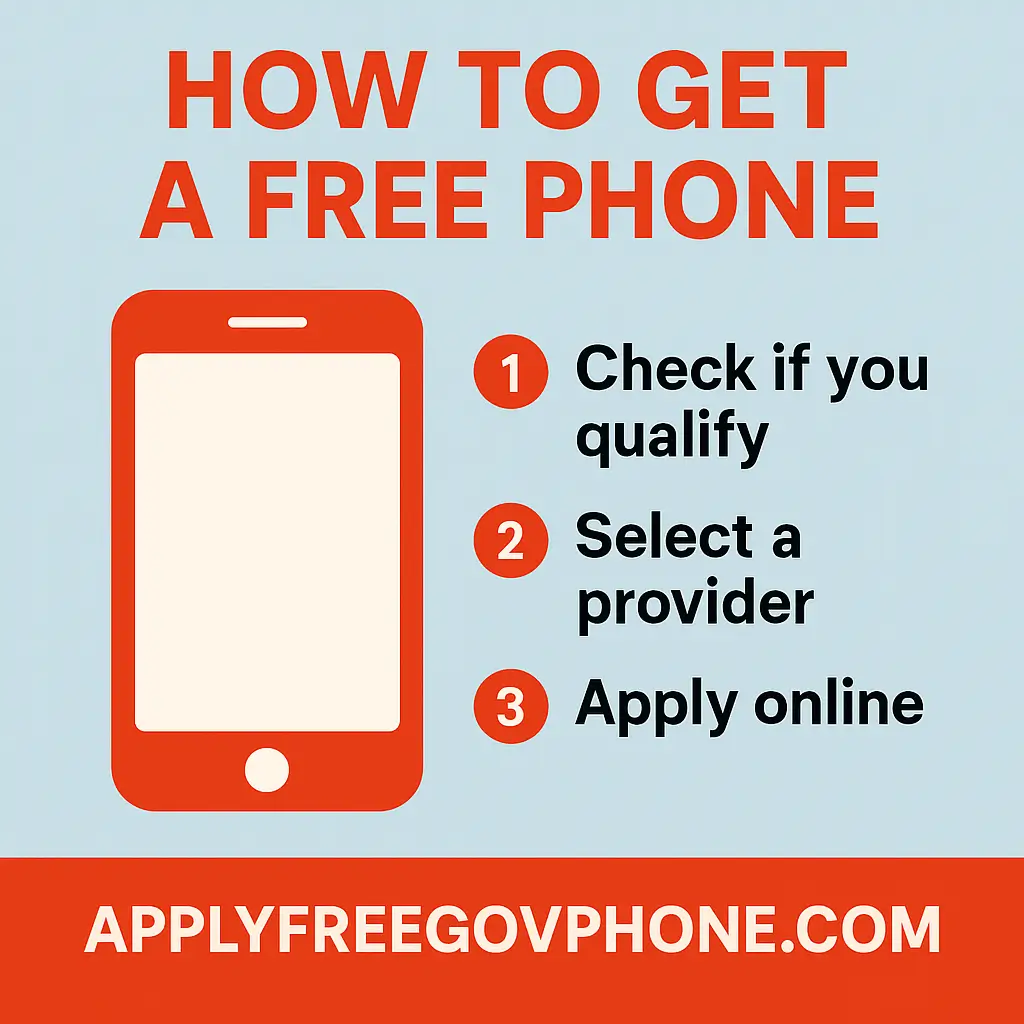
The infographic below summarizes the typical path from checking eligibility to staying enrolled. Use it as a map while you read the detailed steps in this section.

Infographic showing the steps to apply, get approved, and stay enrolled in a free government phone program
  • Confirm eligibility based on income or participation in an assistance program.
  • Choose a provider that serves your state or Tribal area.
  • Submit documents securely, then wait for review.
  • Activate your device and keep using it at least once every 30 days.
  • Recertify each year when requested, or when your life situation changes.

Exact steps can vary by provider and state. A local caseworker, social services office, or legal aid organization can help you navigate exceptions and appeals if your application is denied.

Application channels

Online, mail, and in person help

Most people find it fastest to apply online, especially if they already have copies of their documents. If you face barriers using a computer or smartphone, you can usually apply by mail or work with a community organization that helps residents complete applications on a shared computer.

Timelines

What to expect after you apply

Some applications are approved quickly when the National Verifier can confirm information digitally. Others require manual review, which can take longer. If several weeks pass and you do not hear back, reach out to the provider or the Lifeline support line for an update using contact details from official sources.

If you are denied

Appeals and second reviews

Denial is not always the end of the story. In many cases you can submit additional documents or request a review if you believe a mistake was made. Legal aid organizations and consumer advocacy groups sometimes help residents understand and respond to denial letters at no cost.

Helpful official resources to double check your eligibility

To see the most current federal guidance, you can review the Lifeline information published by the Federal Communications Commission. There you will find explanations of current benefit amounts, eligibility criteria, and consumer protections.

For official details, visit the consumer information on the Federal Communications Commission website at fcc.gov/lifeline-consumers.

What plans and devices are available

Lifeline sets minimum service standards and benefit levels, but providers design their own plans. Some focus on unlimited talk and text with moderate data, while others emphasize larger data packages or international calling options. Devices can range from basic flip phones to full smartphones.

Sample plan comparison

The table below gives a high level view of how different free government cell phone plans might look in practice. These examples combine Lifeline supported plans and low cost options that providers sometimes offer to users who qualify.

Example plan type Talk and text Data Hotspot use Example device Typical monthly cost after Lifeline
Basic voice lifeline plan Unlimited talk and text in the United States 1 to 3 GB per month No hotspot, or limited Entry level Android smartphone $0 to $10
Extended data mobile plan Unlimited talk and text 5 to 15 GB per month with possible slow down after cap Limited hotspot for school or work tasks Mid range smartphone $0 to $25
Voice only plan with flip phone Unlimited voice, limited text No mobile data or very limited Not offered Simple flip phone with larger buttons $0
Bundle with home internet Unlimited talk and text Smartphone data plus home Wi Fi plan Hotspot may be limited or optional Smartphone plus home router Varies by provider and past ACP participation

Actual plans vary widely by provider, state, and network coverage. Always read the full plan details before you decide which option fits your needs, including any fees for replacement devices, roaming, or international calls.

Types of devices you may receive

Many Lifeline providers ship refurbished or entry level smartphones that can handle calling, texting, and basic apps. In some cases, you may have a choice between a smartphone and a flip phone that is easier to use if you prefer large buttons and simple menus.

  • Android smartphones with 4G LTE or 5G compatibility.
  • Simple flip phones with long battery life and tactile buttons.
  • Occasional offers with mid range smartphones when programs run special promotions.

The exact make and model varies by provider and inventory. If you already own a compatible smartphone, some providers will instead ship you a SIM card so that you can keep using your current device while applying the Lifeline discount to your line.

When you compare options, look at storage space, camera quality, and how long the phone is likely to receive security updates. For many households, having a secure phone that can run banking and health care apps is more important than having the newest design.

Provider types and network coverage

Free government cell phone providers generally operate as mobile virtual network operators. This means they use the towers and core networks of larger carriers while managing Lifeline specific billing and customer service.

Provider category Potential advantages Watch out for
National wireless carrier partner Wide coverage in most states and strong network speeds in urban areas. Some plans may require credit checks for add on services.
Specialized Lifeline focused provider Staff who understand the Lifeline process and dedicated support lines. Coverage may be weaker in certain rural or mountain areas.
Regional or local carrier Stronger coverage in specific states or counties, plus local offices. Limited roaming outside the home area during travel.

Before you sign up, ask what underlying network the provider uses in your zip code. You can then compare that network’s coverage maps and talk with neighbors about real world performance where you live and work.

Example use cases by household type

Thinking about how you use a phone in daily life can make it easier to choose a plan. Here are a few example situations:

  • Senior living alone in an apartment. This person may benefit from a simple device with large buttons, voicemail, and reliable emergency calling. A basic voice and text plan with small amounts of data for telehealth apps could be enough.
  • Parent with two school aged children. This household might prioritize a smartphone with enough data for school portals, video calls with teachers, and navigation apps, plus unlimited texting to coordinate schedules.
  • Veteran looking for work. Reliable voicemail and texting are important for job leads, while app access helps with job boards, resume uploads, and interviews by video or phone.
  • College student away from home. A student who qualifies through household income or participation in assistance programs may look for strong campus coverage, hotspot options for laptop use, and enough data to handle online classes.

No single plan fits every household. Take a few minutes to list what you actually use your phone for in a typical week, then see which providers and plans line up with those needs rather than simply choosing the first free option you find online.

Considering a phone upgrade or brand specific device

Some people qualify for Lifeline and also want a particular smartphone brand that fits their preferences for screen size, camera quality, or accessibility features. In that situation, you might combine a Lifeline supported plan with a device you purchase or finance separately. A number of comparison resources explain which providers are more likely to offer a free samsung phone government style promotion or how to use your own compatible device while still receiving the monthly service discount.

Promotions that offer specific device brands can change quickly. Always read the fine print to see whether the device is free after bill credits, whether sales tax or activation fees apply, and what happens if you cancel service early.

Staying enrolled and managing your benefit over time

Getting approved for a Lifeline discount is an important step, but it is just as important to keep your benefit active by using your service, updating your information, and recertifying when required. The rules are designed to prevent abuse, so a few simple habits can help protect your benefit.

Regular usage requirements

Many providers require customers to use their service at least once every 30 days to keep the account open. Usage can include:

  • Placing or receiving a phone call.
  • Sending or receiving a text message.
  • Using mobile data to access the internet or apps.
  • Responding to direct communication from the provider.

If your account shows no activity for an extended period, the provider may send warnings, suspend service, and eventually remove the Lifeline benefit. Marking a reminder on your calendar to make a brief call or send a text each month can prevent accidental cancellation.

Annual recertification

In most cases, Lifeline participants must confirm each year that they still qualify. This process is called recertification. You may receive a letter, email, or text message with instructions. If you do not respond by the deadline, your benefit may be suspended or cancelled.

  • Watch for mail from the program administrator around the same time each year.
  • Update your mailing address with your provider if you move.
  • Keep digital copies of any new benefit letters, pay stubs, or tax returns in case they are needed.

If your household income increases beyond the eligibility limit, or if you leave the assistance program that qualified you, you must notify your provider within 30 days. This prevents overpayment of benefits and reduces the chance of penalties later.

Switching providers or moving to a new state

Life circumstances change. You may move across town or across the country, or you may discover that another provider offers better coverage in your area. Federal rules allow you to change Lifeline providers, but there are procedures and limits you should understand before you switch.

  • Check minimum time between transfers. There is usually a limit on how often you can switch providers within a certain period. Ask about this before you start a transfer.
  • Do not enroll with a new provider while the old one is active without coordination. If two providers submit claims for the same household for the same period, your benefit can be placed on hold while the conflict is resolved.
  • Keep documentation of your move. If you move to a different state, you may need to update your address and review any state specific discounts.
  • Ask about device compatibility. If you bring your own phone to a new provider, confirm that it is unlocked and supports the frequencies used by the new network.

When you plan a move, consider calling your provider a few weeks in advance. Ask whether your service can simply be updated with your new address or whether you need to choose a new provider after you arrive.

When to consider a non Lifeline low cost plan instead

Some households are just above the income limit but still feel a strong financial strain. In those cases, it may make sense to explore low cost prepaid plans that do not rely on Lifeline. These plans sometimes include discounts for autopay, multi line accounts, or bundling with home internet.

Providers that offer free government smartphones or deep discounts for low income households often maintain separate plan menus for customers who qualify and those who do not. Reviewing both menus can help you decide whether it is better to apply for Lifeline now, prepare for a future application, or choose a low cost non subsidized plan.

Scam alerts and how to protect yourself

Unfortunately, any program that helps people with essential services attracts scammers who try to steal money or identities. Knowing the warning signs can help you avoid fraudulent texts, fake enrollment pages, and aggressive sales people who pretend to be official.

Quick scam check questions

If you can answer yes to two or more of the questions below, step back and confirm the offer before you click any links or share any information.

  • Is someone asking for an upfront fee, gift card number, or cash to unlock a free government phone?
  • Does the offer arrive through a shortened link with no clear information about the company?
  • Are you being told that you must sign up within minutes or lose your chance?
  • Is the sender asking for your full Social Security number, your EBT card PIN, or verification codes from your bank or email account?
  • Does the website hide its physical address and customer service phone number?

Common scam patterns

  • Text messages that claim you are pre approved. These usually invite you to click on a link that looks similar to a real provider but is hosted at a completely different domain.
  • Fake processing fee requests. Some scam websites ask for a one time processing fee, shipping fee, or activation fee that you must pay with a card or a payment app. Legitimate Lifeline providers do not ask for large upfront fees for basic enrollment.
  • Social media comments that push you to message a stranger directly. These posts often use phrases like guaranteed approval or instant unlock and may disappear after a few hours.
  • Unverified street booths. While some real providers set up tables at community events, scammers sometimes copy their appearance. Always ask for printed materials with full company details and cross check the information online before handing over personal documents.

If something feels off, you can take a photo or screenshot, walk away, and ask a trusted community organization or legal aid office to help you check whether the offer is legitimate.

Safer ways to start your application

You can lower your risk of fraud by taking control of where and how you start the sign up process.

  • Type official addresses into your browser instead of tapping links in unsolicited texts or emails.
  • Use bookmarks for sites you trust rather than searching broad phrases that scammers might target with ads.
  • Look for a clear privacy policy and contact page that lists a street address and a customer service number.
  • Avoid entering your information on shared public computers unless a trusted staff member is helping you.

If you believe you have shared information with a scammer, contact your bank or card issuer immediately, update passwords on key accounts, and consider freezing your credit file. Reporting suspicious offers helps protect your neighbors as well as your own household.

Where to report problems

If you encounter a suspicious offer or believe a provider is misusing your information, you can report the issue to several agencies. Having screenshots, text message logs, or printed copies of ads makes it easier for investigators to follow up.

  • Federal Trade Commission for general consumer fraud complaints.
  • State attorney general offices for local enforcement and consumer protection.
  • Local legal aid societies and nonprofit consumer protection clinics for advice.
  • Program specific hotlines listed on official Lifeline and federal communications websites.

When you report a problem, you help strengthen protections for everyone who depends on these programs. Even if a scammer is not caught right away, complaint patterns can guide future enforcement.

Three habits for safer applications

  1. Store copies of your important documents in a secure home folder or encrypted digital vault.
  2. Keep a written list of official phone numbers and websites for your chosen provider and agencies.
  3. Talk with a trusted friend, family member, or caseworker before you approve any request that feels unusual.

Taking a few extra minutes at the beginning helps you avoid months of frustration from identity theft or unauthorized charges.

Frequently asked questions about free government phones

The questions below address many of the concerns our readers share when they first hear about free government cell phone programs. The answers are written in plain language and focus on everyday situations.

For many eligible households, the monthly phone service cost is reduced to zero after the Lifeline benefit is applied. Some providers also offer a device at no charge when you first enroll. However, you may still be responsible for certain costs such as sales tax, activation fees, or replacement fees if your device is lost or damaged. Always read the plan description and ask about any one time or ongoing charges before you agree.

Federal rules allow only one Lifeline supported service per household. This usually means one discounted phone line or one discounted internet line at a single address, not one per person. In certain limited cases, people who live at the same address but do not share income or expenses can be considered separate households, but this requires specific documentation. When in doubt, talk with the program administrator before submitting multiple applications from the same address.

If your household income rises above the eligibility limit, or if you no longer participate in the assistance program that qualified you, you must notify your provider within 30 days. They will explain how to end the Lifeline benefit or transition you to a different plan. Failing to report changes can lead to future issues, including the possibility that you will need to repay benefits that were received after you no longer qualified.

In many cases, you can keep your existing phone number when you move to a Lifeline provider or switch between Lifeline providers. This process, called porting, requires that your old account remain active until the transfer is complete. Before you cancel your current service, ask the new provider for instructions and confirm that your number is eligible to transfer to their network.

The program recognizes that some people experiencing homelessness or housing instability still need a phone. In certain circumstances, you may use a shelter address, a description of your location, or the address of a trusted institution as part of your application. Providers and program administrators have specific procedures for these situations, so it often helps to work with a caseworker or social service agency that is familiar with the rules in your state.

Threats that your benefit will be cancelled within hours unless you pay a fee or share a code are a common warning sign of a scam. Legitimate program administrators send written notices with clear deadlines and do not demand immediate payment by gift card, wire transfer, or peer to peer payment app. If you receive this type of call, hang up, find the official customer service number printed on your provider bill or website, and call back using that number instead.

The Lifeline discount itself does not require a credit check and does not directly impact your credit score. Some providers may run a credit check if you choose additional services or financed devices that go beyond the basic benefit. In general, the discount is treated as a benefit to help cover communication costs, not as taxable income. However, everyone’s tax situation is different, so consider speaking with a qualified tax professional if you have questions about how your phone service interacts with your broader financial picture.

The Federal Communications Commission publishes the governing rules for the Lifeline program, and the Universal Service Administrative Company manages many day to day operations. For up to date information, you can review the Lifeline consumer page on the Federal Communications Commission site or the Lifeline details on the Universal Service Administrative Company site at usac.org/lifeline. These resources explain how the program is funded, who qualifies, and how complaints are handled.

No. This website does not provide phone service and is not a government agency. It is an independent information resource that explains how free government phone programs work so that residents can make informed decisions. We do not approve or deny applications, and we do not ask for Social Security numbers or benefit account PINs. When you are ready to apply, you should use official program sites or trusted providers.

In most cases, yes. The Lifeline application process is the same for all eligible households, regardless of whether the qualifying factor is age, disability, or participation in a specific program such as Veterans Pension. However, some community organizations run targeted outreach events or provide extra assistance for seniors and people with disabilities who may need help completing the online steps. Taking advantage of that support can make the process less stressful.

About this website and our editorial standards

PhoneFreeGovt is an independent information resource focused on helping United States residents understand free and low cost phone assistance options. We are not a provider, we do not process applications, and we do not sell your data. Our goal is to explain complex program rules in everyday language so that you can make your own informed choices.

About the author and review team

Dr. Marcus Thorne, PhD ✓ Verified Expert

Specialist in Digital Equity and Telecommunications Policy. Former advisor on federal connectivity infrastructure.

Dr. Thorne has spent more than fifteen years working at the intersection of communications networks, consumer protection, and public policy. His experience advising on federal connectivity initiatives helps ensure that this guide reflects both the letter of the rules and the way they affect households in day to day life.

This guide is written in collaboration with a small advisory group that includes a former call center manager for a Lifeline provider and a community social worker who coordinates benefits for older adults. Their experience helps ensure that the examples on this site match what people encounter in real life.

We periodically invite subject matter experts to review sections related to legal rights or regulatory changes. When major policy updates occur, we update the relevant sections and refresh the last updated date near the top of the page.

How we research and verify information

Our content is built from publicly available federal rules, official program documentation, and field experience helping real households. Before new sections are published:

  • We review current guidance from the Federal Communications Commission and other official sources.
  • We compare multiple trusted references to avoid relying on a single outdated document.
  • We test sample application flows through provider websites to ensure that our step by step explanations are realistic.
  • We invite feedback from readers and community partners when they spot changes on the ground.

Even with careful review, program rules can change quickly. You should always confirm key details through official channels before you make financial decisions based on any online guide, including this one.

Disclosure, independence, and financial relationships

PhoneFreeGovt is an informational project. We do not sell phones or service, and we do not operate a call center that signs people up for Lifeline. In some cases, we may mention specific providers or resources that readers find helpful. Those mentions are based on features such as clarity of information, customer support quality, or alignment with consumer protection best practices.

If we ever receive compensation for referrals or advertising in the future, we will label those relationships clearly and never let them override our commitment to accurate, easy to understand information. Our primary responsibility is to the people who use this site to better understand their options, especially those who face barriers because of income, disability, language, or technology access.

Nothing on this site is legal, financial, or tax advice. It is general information for a broad audience. For advice about your specific situation, talk with a qualified attorney, financial counselor, or tax professional who can consider all the details of your case.

Not a government website

This site is not affiliated with the United States government, any federal agency, or any specific Lifeline provider. We do not have access to your application status or your billing records. When you complete an application, you should do so directly through official program websites, trusted providers, or authorized community partners.

To review official program descriptions and consumer protections, you can visit the Federal Communications Commission Lifeline consumer information page or the Lifeline section of the Universal Service Administrative Company site.

Contact and feedback

We welcome corrections, suggestions, and feedback from residents, advocates, and providers. While we cannot respond to every message individually, reader input is one of the ways we keep this guide accurate and useful over time.

How to reach the PhoneFreeGovt Information Project

PhoneFreeGovt Information Project
1200 Civic Center Plaza Suite 420
Raleigh, NC 27601
United States

Toll free information line: 1 800 555 2174 (voicemail, non emergency)

Please do not send copies of your Social Security card, full tax returns, or benefit account PINs to our email address. We cannot process applications or verify individual eligibility. Instead, use our content as a starting point and then submit your documents only through official program channels.

If you notice outdated figures, broken links to official sites, or changes in program rules in your state, a short note with a link to the updated information helps us keep this guide current for everyone.

Before you contact us

  • For application status questions, contact your chosen provider or the program administrator directly.
  • For fraud or scam reports, consider contacting the Federal Trade Commission or your state attorney general.
  • For legal emergencies, contact a local legal aid office, not this website.

Messages submitted through email or voicemail may be stored for quality and training purposes, but we do not sell or share your contact details with marketing companies.